

Merritt Island National Wildlife Refuge is a large wildlife refuge on Florida’s Space Coast, east of Titusville. You can tour the marshes by car, look for wildlife along refuge roads or walk a trail; the refuge also has a visitor center with a short boardwalk.
- From Cocoa: The refuge is about 8.0 miles from Apollo Inn.
- Roads and trails: Generally open daily from sunrise to sunset.
- Popular drive: Black Point Wildlife Drive is a 7-mile auto tour.
- Passes: A Refuge Pass is required for Black Point Wildlife Drive and Bio Lab Road, with several pass types available.
How do you get from Cocoa to Merritt Island National Wildlife Refuge?
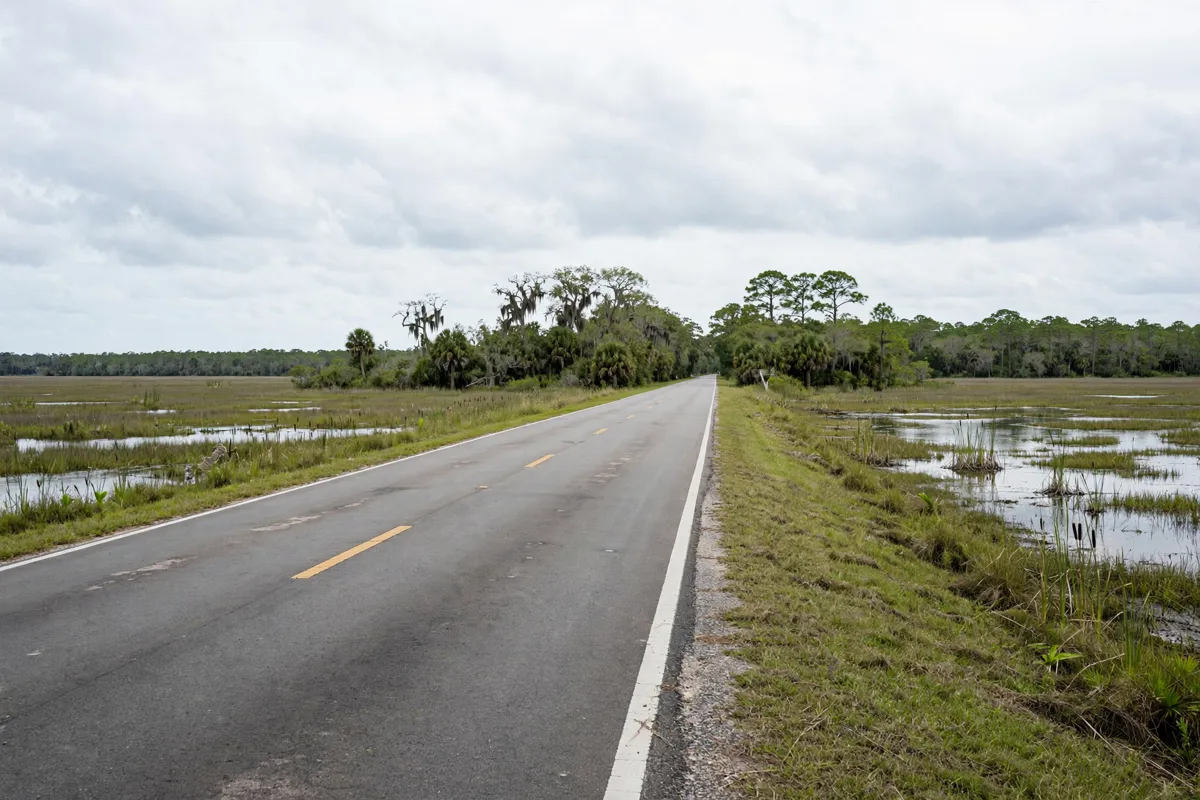
From I-95, take Exit 220 for Titusville and State Road 406, then drive east on Garden Street for 4 miles and cross the Max Brewer Causeway Bridge. The refuge begins on the east side of the causeway.
To reach the Visitor Center from the refuge entrance, continue 4 miles and stay right at the fork; its entrance sign is on the right. The Visitor Center is at 1963 Refuge Headquarters Road, Titusville, Florida 32782.
The refuge sits within a Space Coast outing, separate from a visit to the space center. If you’re planning both, the Kennedy Space Center day trip from Cocoa covers that other destination.
Where can you watch wildlife and take a scenic drive?
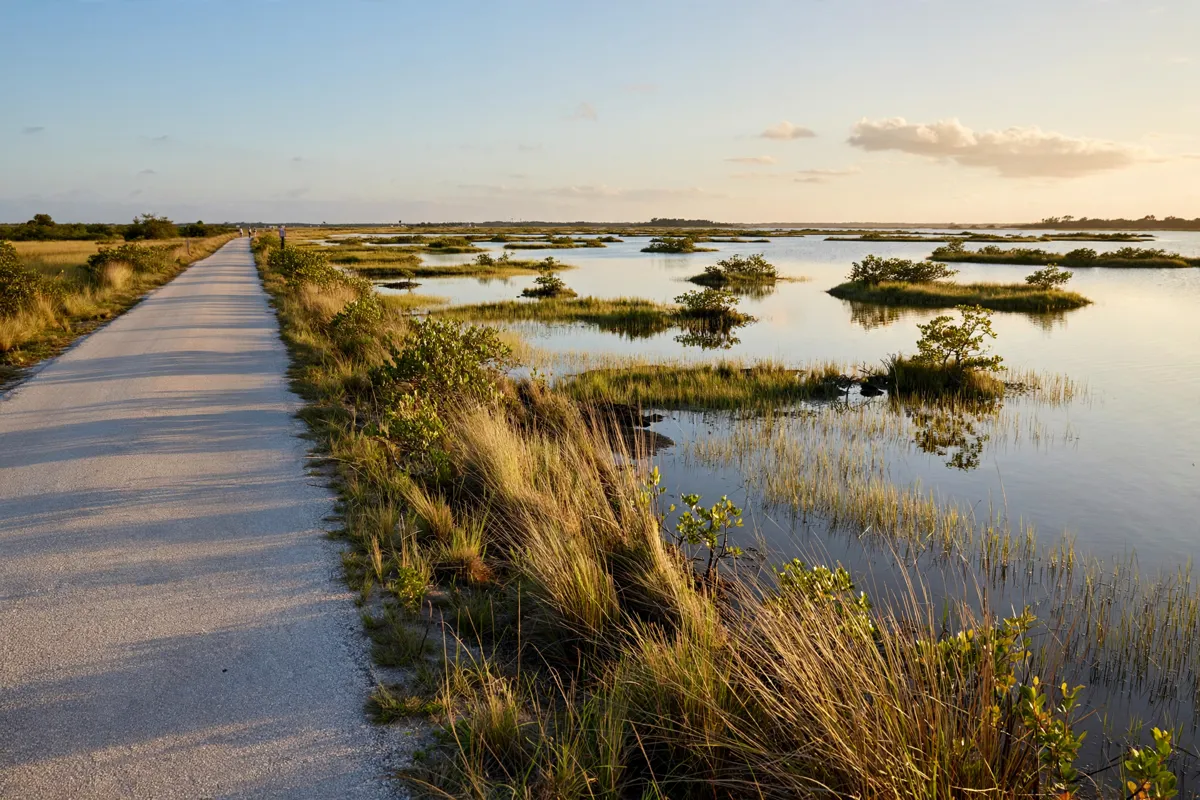
Black Point Wildlife Drive is the refuge’s most popular wildlife-viewing area, with a 7-mile auto tour through refuge habitat. Refuge dike roads also provide opportunities for wildlife observation and photography.
A Refuge Pass is required to enter Black Point Wildlife Drive and Bio Lab Road. A current signed Federal Duck Stamp or Interagency Pass waives that requirement. The Merritt Island Daily Pass costs $10 per vehicle; the Merritt Island Annual Pass costs $25 per vehicle, and the Foot/Bicycle Daily Pass costs $10 per individual.
You can buy daily passes at self-pay stations with exact change, or purchase passes at the Visitor Center from 8:30 a.m. to 3:30 p.m. Tuesday through Saturday. Annual, daily and foot/bicycle passes are also available online through Recreation.gov.
Which trails and visitor facilities can you use?
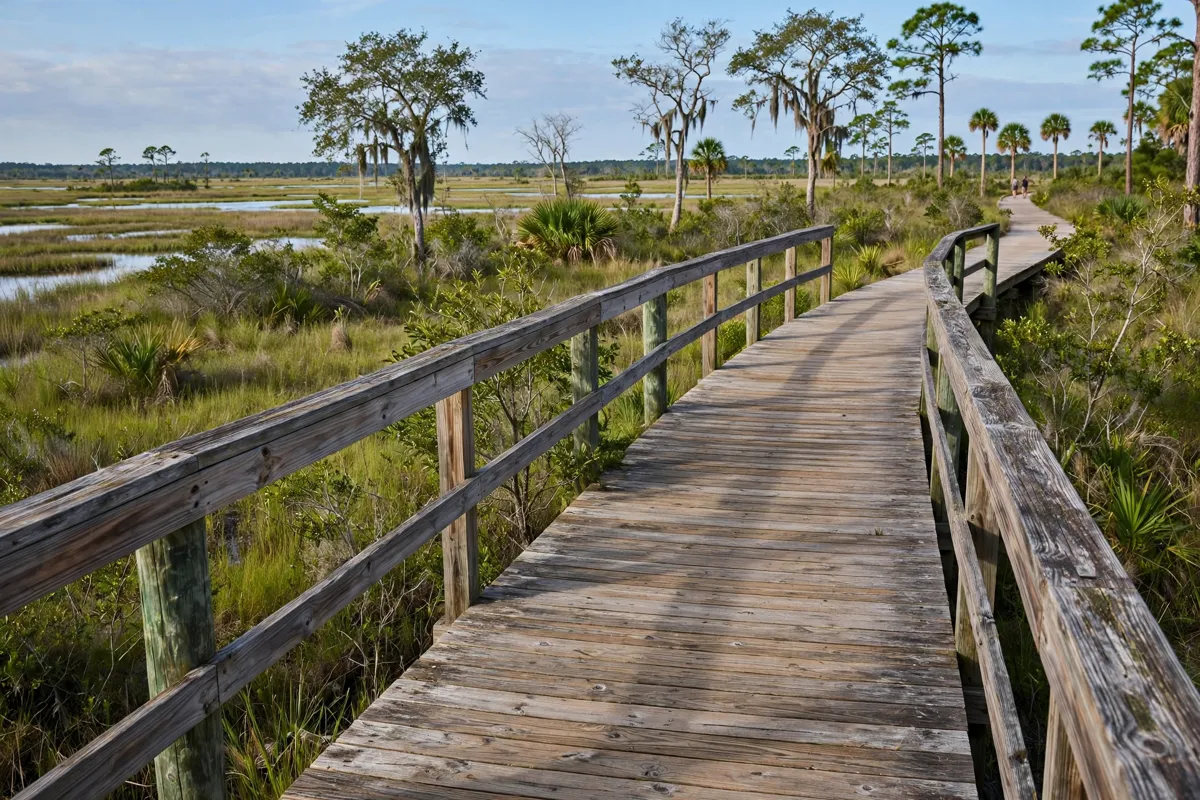
The Visitor Center offers information, exhibits, movies, programs, water, restrooms, a bookstore and a short boardwalk trail. Its hours are 8:30 a.m. to 4:00 p.m. Tuesday through Saturday; it is closed Sunday, Monday, Thanksgiving, Christmas and New Year’s Day.
The Visitor Center boardwalk is a 0.29-mile loop with three benches, takes about 15 minutes and is the only trail the refuge identifies as wheelchair accessible. Other trails are generally flat, but their surfaces vary between boardwalk, footpath and mowed grass. Bicycles are not permitted on the trails.
Allan Cruickshank Memorial Trail
This 0.52-mile figure-eight loop passes through seasonally flooded forest. Allow 20–30 minutes, and park at the Oak and Palm Hammock trailhead, 1.2 miles east of the Visitor Center.
Oak Hammock Trail
The Oak Hammock Trail is a 1.23-mile loop, with an estimated walking time of 40–50 minutes. Its trailhead parking is shared with Palm Hammock Trail, 1.2 miles east of the Visitor Center.
Palm Hammock Trail
This 1.04-mile loop takes about 30–40 minutes; its trailhead is off State Route 3.
When is the refuge open, and what rules should you know?
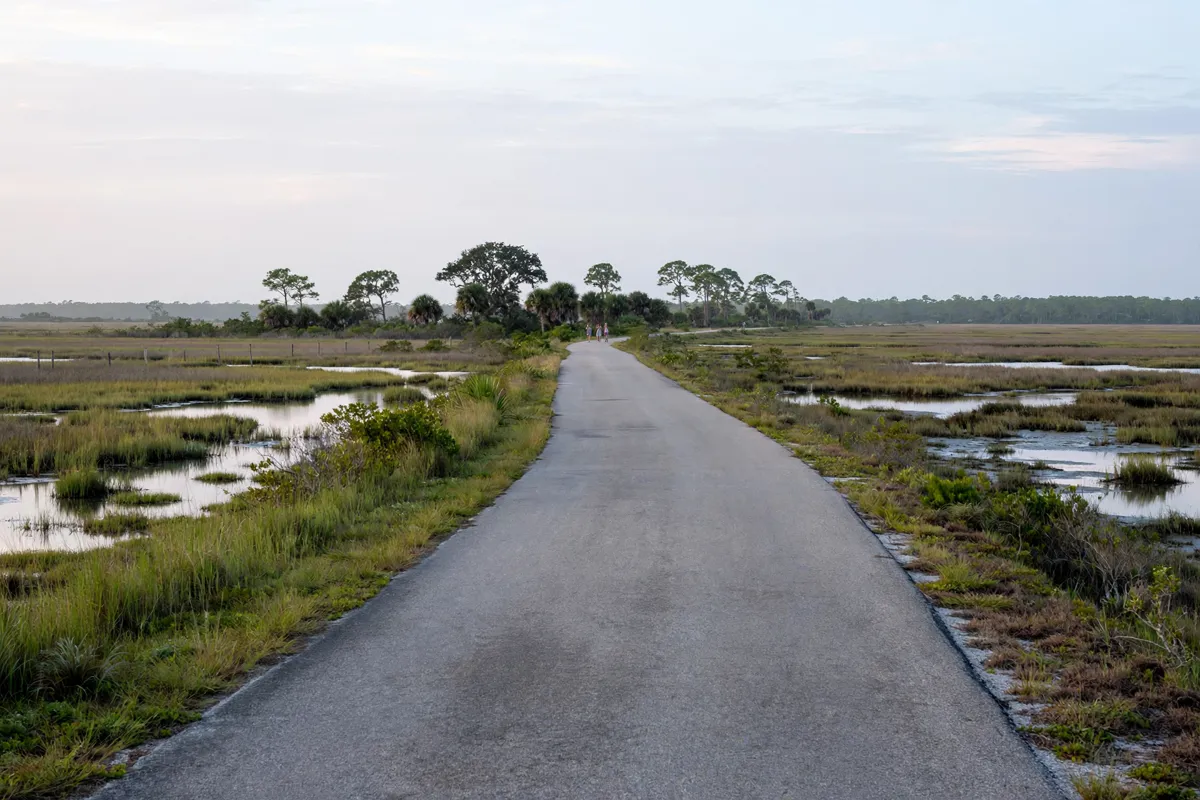
Refuge roads, trails and boat ramps are generally open daily from sunrise to sunset. Bair’s Cove and Beacon 42 are the only boat ramps available for night launching.
For current hours, pass details and access conditions, check the official site before you go. The U.S. Fish and Wildlife Service directs visitors to call the Visitor Center at (321) 861-0669 for updates.
Refuge rules prohibit feeding, watering, enticing or disturbing wildlife. Pets must be leashed and under control; camping, open fires and barbecue grills are not permitted.
What should you bring for a refuge visit?
Bring water and sunscreen, and plan to stay hydrated on the trails. Florida summers are hot and humid, daily lightning storms are possible, many trails lack shade, and biting or stinging insects may occur in every season.
For a wider Cocoa outing, you could pair the refuge with a separate coastal stop; Cocoa Beach as a day trip from Cocoa focuses on that option.
FAQs
When was Merritt Island National Wildlife Refuge established?
It was established in August 1963 to provide a buffer zone for spaceflight operations at Kennedy Space Center.
Can you bring a dog to the refuge?
Pets must be leashed and under control. Wildlife must not be fed, watered, enticed or disturbed.
Are camping and fires allowed?
Camping, open fires and barbecue grills are not permitted.